
Short answer: Smile Preview is a way to, before starting aesthetic dental treatment, discuss with your dentist the possible appearance of your future smile. Photographs, digital visualisation, models or a trial mock-up can help you to see more clearly the proportions, shape and character of the teeth. However, the proposed smile is not a guarantee of an identical result , nor does it replace a clinical examination, bite assessment and a treatment plan.
Imagine you are considering new veneers but cannot quite explain what you would like. Perhaps you do not like the length of your front teeth, perhaps you want a small gap closed, or it is most important to you that the smile remains natural. When you say “I want nicer teeth”, the dentist and you do not have to imagine the same thing. This is precisely why the Smile Preview concept exists: so that, before important decisions, you have a shared visual basis for discussion.
In this guide we explain how it works Mr Smile Preview , what is usually assessed, what types of visualisations exist, how much the proposal can be changed and at what stage veneers, orthodontics or other solutions should be discussed. The aim is not for the screen to promise you a perfect smile, but for you to make a more informed decision about your smile.
What is Smile Preview and what is it actually for?
Smile Preview represents a phase of aesthetic planning in which the potential appearance of the smile is considered before the final fabrication of restorations or the start of a particular treatment . It is not a separate medical diagnosis nor a universal appliance. Depending on the dental practice, the clinical case and the planned therapy, it may include photographs, computer renderings, dental models or a trial simulation in the mouth.
The greatest value is not merely in seeing a "prettier picture". The value lies in the patient being able to indicate specific details: "These edges are too straight for me", "I would like the front teeth to be less dominant" or "I want a small natural difference between the teeth to be visible". The dentist then explains what is aesthetically possible and what is limited by dental health, tooth position and function.
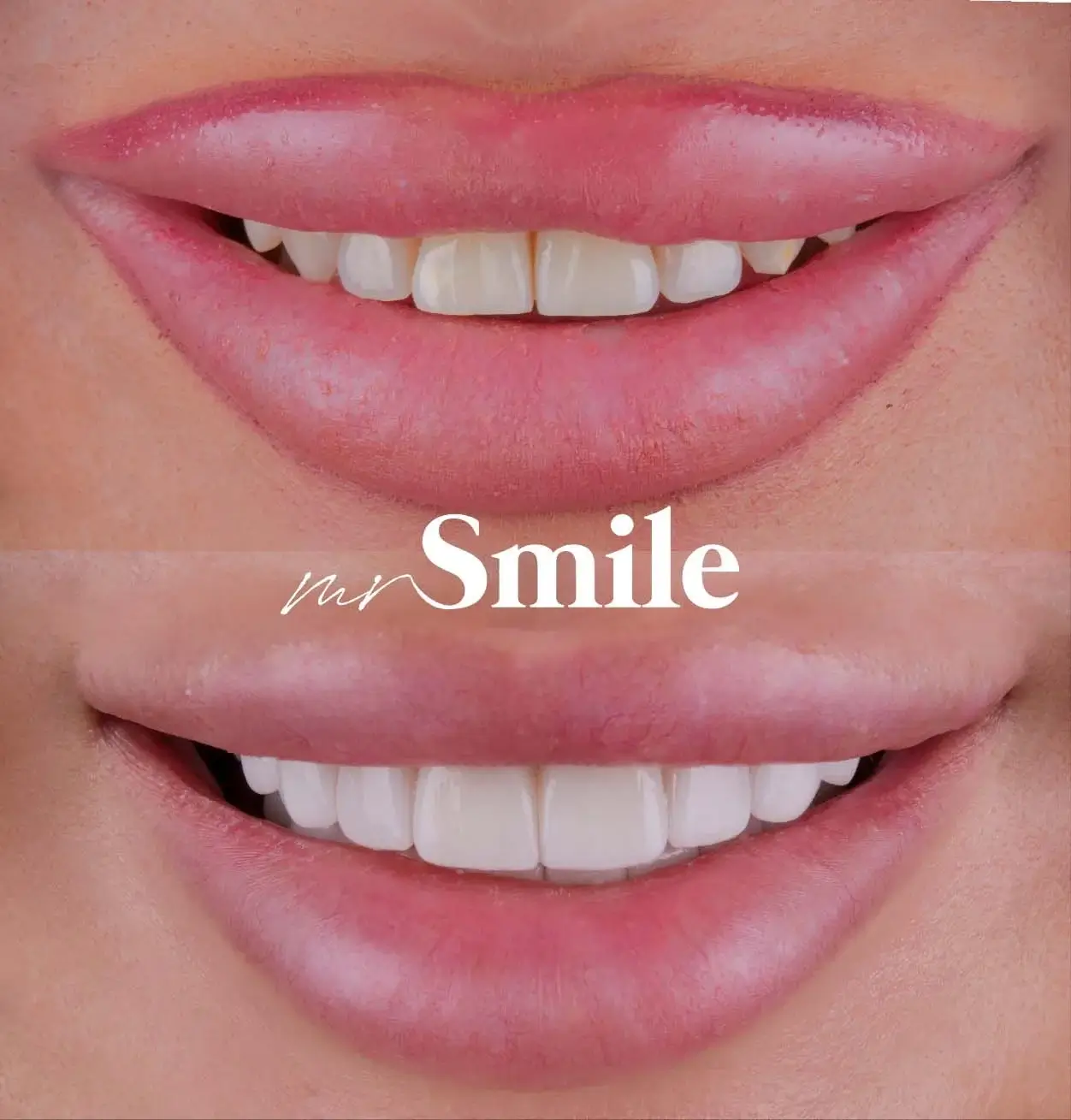
On the page Mr Smile Preview the emphasis is precisely on the analysis of the face and proportions, discussion of aesthetics and planning before the final fabrication. The aim is not for every patient to receive the same "Hollywood" smile, but a proposal that fits their characteristics and realistic clinical possibilities.
Why a social media photograph is not a sufficient plan?
A photograph can be useful as inspiration, but it does not show how the teeth contact when you bite, the condition of the gums, the available space for restoration, or how the smile looks when you speak. Two people may want a similar shade and shape yet have completely different treatment needs. For this reason, an example from the internet should be used to describe taste, not to select a finished result.
What the first step involves: consultation and examination
Before any aesthetic proposal is made, it is important to understand exactly what you want to change and why . Some people are only bothered by the colour and shape of two front teeth; others have worn edges, irregular contacts or changes that have occurred over the years. Different reasons may lead to different solutions.
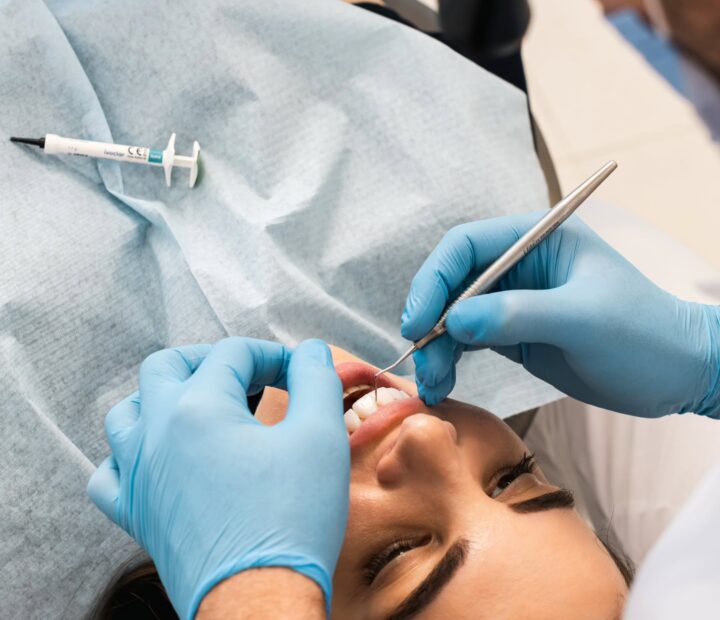
A quality consultation therefore begins with questions, not the automatic selection of veneers. The dentist asks about expectations, habits, any sensitivity or pain, previous treatments and possible problems with teeth clenching. They then assess the teeth, gums, bite and any available documentation. When necessary, appropriate additional diagnostic imaging or examinations are recommended.
What should you prepare before the consultation?
It is useful to think in advance about the three aspects of your smile that bother you most. Instead of the vague request "I want perfect teeth", you can say: "I'm bothered by the gap between my front teeth", "I don't want an entirely opaque white colour" or "I would prefer slightly rounded edges". Bring any previous dental records if you have them and mention prior restorations, orthodontic treatments, teeth grinding or gum inflammation.
Such preparation reduces misunderstandings. It also helps you, during the examination, to understand the difference between the change you would like and the change that is safe to carry out.
What types of visualisations of a new smile are available?
The term Smile Preview is often used as a collective name for several approaches. They should not be confused, as they portray aesthetics differently and provide different information. The specific choice depends on the clinic and your treatment plan; not every method is necessary or available for every case.
Digital visualisation on a photograph
Based on appropriate photographs it is possible to create a graphic proposal of how the length, shape or relationship of the front teeth could be changed. The advantage is that ideas can be compared and discussed relatively easily. However, a two-dimensional image does not fully show volume, function, material thickness or the actual movement of the lips . The shade shown on the screen may differ from its appearance in natural light.
Such a presentation is an excellent starting point for discussion, but it is not sufficient as the sole basis for an invasive intervention. Every option must undergo clinical assessment.
Digital 3D model and proportion planning
When the case requires it, data on tooth shape can be used for digital modelling of proposals. A three-dimensional approach helps the team consider volume, contacts and available space. However, even a detailed 3D model is not a substitute for an intraoral examination: different materials, tooth position, the gums and masticatory load can affect the feasibility of the plan.
Wax-up and mock-up: trial shape prior to the final restoration
In aesthetic prosthodontics, these terms are familiar wax-up (model of the intended shape) and mock-up (temporary trial display). In selected cases, such a trial can help the patient better assess the shape, length and speech than when viewing a photograph alone. However, the trial material is not identical to the final ceramic in terms of optical properties, strength or tactile feel.
The professional literature describes both digital and conventional approaches as means of communication and planning. No single representation can, by itself, guarantee the final outcome. Ask the team which type of Preview is planned specifically for Your case , instead of assuming that all patients undergo the same procedure.
What does a dentist analyse when designing a smile?
A good aesthetic plan is not a collection of individual 'nice teeth'. Teeth are part of the face, and the smile changes as we speak, laugh or relax the lips. Therefore several elements are considered that must be harmonised.
Proportions, the midline and the edges of the front teeth
The relative length and width of the teeth are assessed, along with the position of the dental midline, the transition between the central incisors and adjacent teeth, and the shape of their edges. Complete geometric symmetry is not always consistent with a natural appearance. Sometimes small differences are precisely what give a smile its character.
Colour is not just a choice of a shade of white
Natural teeth have varying shades, translucency at the edges and surface texture. On a phone or monitor the colour depends on lighting and screen settings, so a preview can illustrate the direction but cannot promise an identical final shade. For ceramic restorations the substrate, type of material, thickness and lighting conditions are also important.
Gums, lips and the smile during speech
The gum line, tooth visibility when the lips are relaxed and lip movements can significantly affect the impression. A proposal that looks harmonious in a single photograph may not appear the same during speech or laughter. For this reason, it is advisable to observe the smile from multiple angles and, where useful, during natural facial expressions.
Bite and function take precedence over appearance
Teeth are not used only for photographs. If the jaw relationships are unfavourable, the proposed lengthening or widening of the teeth can change contacts and load distribution. Tooth clenching and bruxism further influence the choice of treatment and protective measures. Therefore, visualisation must remain subordinate to a functionally sustainable plan, even when the aesthetic desire is clear.
What does the Mr Smile Preview look like, step by step?
The process is not identical for every patient, but the approach described by the Mr Smile team is based on discussion, analysis, visualisation and joint agreement on options. The sequence below is intended to help you understand the planning rationale, and does not constitute a promise that every step will be carried out with the same instrument or in the same number of visits.
1. You define what you want to change
At the consultation you describe your current smile and your expectations. The dentist helps make “more natural”, “brighter” or “more regular” into concrete goals. Priorities are determined: shape, length, spacing, colour, or a combination of elements.
2. The team assesses the current condition
A clinical assessment of the teeth, gums and bite follows. If there is decay, inflammation or other health problems, these take priority in planning. A decision about veneers should not be made solely on the basis of an aesthetic simulation.
3. A preliminary aesthetic proposal is presented
When appropriate, a suitable digital or physical representation is used. At that point, it is easier to discuss the proportions and character of the smile. The proposal may be modified when clinical constraints are taken into account , therefore it should be regarded as a starting point for collaborative work rather than a final confirmation of the treatment.
4. You consider corrections and alternatives
You can explain what you like or dislike, ask which changes are realistic and consider alternative treatments. When the options are clear, the discussion covers materials, required appointments, risks, maintenance and costs. There is no reason to make the decision under pressure.
5. Decide on the next step
If the plan suits your health status and goals, the dentist explains the next phase. Depending on the situation, this may involve further planning, orthodontics, the manufacture of veneers or another procedure. Preview itself does not mean you are committed to a specific treatment.
Can you alter the proposal until you are satisfied?
The role of Preview is precisely to facilitate the discussion about your wishes. If you feel the proposed smile is too white, that the units are too long, or that the shape does not suit your face, you should say so clearly. It is helpful to distinguish aesthetic corrections that are feasible from changes that would jeopardise health or function.
For example, imagine you want significantly longer front teeth. A visualisation can show that idea, but an assessment of the bite may reveal that additional length is not appropriate without a different plan. Sometimes the dentist will propose a more conservative correction; sometimes prior orthodontic treatment will be necessary. It is not a failure when the team says that an idea cannot be carried out safely — it is part of responsible planning.
It helps to ask three questions: what can be changed without compromising treatment, what requires additional steps and what is only illustrative? This avoids a situation where the on‑screen result looks convincing, but the treatment plan remains incomplete.
Does Smile Preview mean that No Prep veneers are the best choice?
No. The preview shows the aesthetic direction, while the indication for veneers is determined by a clinical examination. No Prep veneers can be an option for selected patients when the desired shape can be achieved while preserving the natural tooth tissue and with a favourable tooth position. However, adding material can create unwanted thickness or unfavourable contacts if there is insufficient space.
If the teeth are significantly rotated, irregularly aligned, or their position needs to be changed, orthodontics may be a more appropriate solution. If the aim is a minor aesthetic correction, the dentist may consider other procedures. When several issues need to be addressed simultaneously, the plan may be part of a broader Mr Smile Makeover of the process.
Important distinction: A visually appealing design does not confirm that the plan can be realised without grinding, without anaesthesia or without additional treatments. These matters are resolved at the consultation, on an individual basis.
How much does the digital proposal differ from the final result?
Differences are possible, even when the plan has been carefully made. The Preview can accurately represent the intended relationships and contours, but the final result depends on tissue health, available space, the procedure, the materials, lighting and how the teeth function. With ceramics in particular, translucency, fine texture and the appearance of shade can differ in actual lighting.
Moreover, a photograph is static while a smile is dynamic. Only when a person speaks, laughs or bites can certain details be seen that are not apparent in the simulation. Therefore the dental team assesses the clinical result from multiple aspects, not just by comparing it with a single image.
Professional papers on digital smile design emphasise its value for communication, but also underscore the limits of digital precision and the need for clinical validation. A good preview should set realistic expectations — it is not a promise of perfect pixel-for-pixel correspondence with the finished tooth.
What if you have a problem with your gums, your bite, or worn teeth?
In those cases a visualisation can be useful for the long-term goal, but it is not the first or only step. Bleeding gums, pain, active caries, damaged restorations or severe tooth wear require diagnosis and appropriate treatment. An aesthetic representation does not indicate whether the underlying health problem has been resolved.
Worn edges, for example, may be associated with tooth clenching, incorrect contacts or other factors. If those causes are not understood, the new aesthetics alone will not eliminate the risk. Similarly, changing the shape of the front teeth may look straightforward on screen, while a clinical examination reveals the need for a more complex functional plan.
It is helpful for the patient to request an explanation of the sequence: what needs to be treated first, what is an optional aesthetic step, and how the result is maintained . This makes Preview part of a broader healthcare decision.
What is the role of the dental laboratory in treatment planning?
When prosthetic restorations are planned, communication between the dentist and the laboratory can be highly significant. Information about proportions, shade, the shape of margins, texture and functional requirements is conveyed to the team fabricating the restorations. The clearer the expectations are aligned, the easier it is to discuss the details that are important to the patient.
On the Mr Smile website the collaboration between the clinical team and its in‑house laboratory is presented as part of an individualised approach. However, even laboratory precision does not remove anatomical limitations or the need for clinical examination. It is important that the final work is aligned with dental health, oral hygiene, speech and occlusion — not just the aesthetic mock‑up.
How long does the Smile Preview last and is there an additional charge?
Duration and price depend on what is actually included: a basic consultation with photographs is not the same as more detailed digital planning, additional models, a trial mock‑up or laboratory work. The number of visits required also depends on the complexity of the case, prior documentation and any additional diagnostics.
Therefore it would not be accurate to state a single amount or to guarantee that every Preview will be completed in one appointment. Before booking, ask what the consultation covers. , whether the visualisation is charged separately, what the expected timeframes are, and whether part of the cost might be credited towards a subsequent treatment. Mr Smile prices and the specific available options need to be confirmed directly with the team.
To organise a consultation you can open the booking page and select the appropriate location.
How can you assess whether the visualisation is truly useful?
A presentation is not high-quality merely because it looks impressive. A useful Preview should leave room for questions, clearly explain limitations and show how the proposed aesthetics relate to the treatment plan. If the discussion remains only a comparison of two photographs, you may not yet have enough information to decide.
Pay attention to whether you know which part is a preliminary idea, whether alternatives have been explained, what the risk is of the planned appearance changing and what happens if you decline the proposal. Also ask who assesses the functional contacts, when the final decision on materials is made and what the maintenance of the work will involve.
Informed consent implies understanding the purpose, potential benefits, risks and reasonable alternatives. Therefore do not rush your decision just because you liked the visualisation. A good aesthetic plan should still be understandable when the screen goes dark.
Ten questions worth asking your dentist
Before deciding on any aesthetic treatment, prepare questions. They will help you leave the consultation with specific information, not just a nice photograph:
- Which part of the presentation represents an aesthetic wish, and which has already been clinically confirmed?
- Is an additional examination, imaging or therapy required before the aesthetic procedure?
- Can I compare a more natural and a more pronounced option for shape and colour?
- Is the proposed change possible without tooth preparation, and under what conditions?
- How will the new shape affect the bite, speech and hygiene maintenance?
- What are the alternatives to veneers, and in which situations are they more appropriate?
- Can the proposal be tried on physically, or is it only a digital illustration?
- What does the planning cost cover, and what does the treatment cost cover?
- What if, during the course of treatment, it becomes necessary to adjust the plan?
- How will the result be monitored and maintained in the years to come?
You do not have to receive universal answers. It is important that you receive answers that relate to Your teeth, Your health and the specific proposed plan .
Your new smile
begins here.
Every transformation begins with a conversation. Book a consultation and discover the possibilities for your smile.
BOOK AN APPOINTMENTFrequently asked questions about Smile Preview
Does Smile Preview show exactly how I will look after treatment?
No. The preview is an aid for planning and communication, not an exact projection of the final outcome. The final appearance may be affected by clinical findings, materials, tissue condition and the fabrication process.
Can I see my future smile before having veneers fitted?
In appropriate cases an aesthetic proposal can be produced before the final fabrication. The type of visualisation used and when it is presented depends on the individual treatment plan and the capabilities of the dental practice.
Is Smile Preview the same as Digital Smile Design?
The terms are related but not necessarily identical. Digital Smile Design usually denotes a digital approach to planning, while Smile Preview may refer to a broader set of visual and trial representations.
Can the colour or shape be altered in the proposal?
Aesthetic guidelines can be considered and modified within technical and health-related constraints. The dentist should explain which correction is feasible and when a change would be detrimental to function or to the preservation of the tooth.
Is an examination necessary if I only have a small gap between my teeth?
Yes. Even a minor aesthetic change can be related to tooth position, the bite or the condition of the gums. An examination helps to select appropriate options and avoid unnecessary intervention.
Does Preview mean I must book veneers immediately?
No. The visualisation does not commit you to treatment. You may ask additional questions, consider alternatives, or seek another professional opinion before consenting to therapy.
Is it possible to have a Preview if I have crowns or old fillings?
Aesthetic planning can be considered for patients with existing restorations, but this alters the clinical assessment and options. It is necessary to examine the condition of the restorations, the abutment teeth and the surrounding tissues.
How much does Mr Smile Preview cost?
The price and scope of planning depend on the necessary steps; request specific information from the Mr Smile team before booking.
Conclusion: first a clear vision, then a responsible plan
The most important advantage of the Smile Preview is not the promise of a “perfect smile at the click”, but the opportunity to reach an understanding with your dentist in good time. When you discuss proportions, colour, shape and your priorities, it is easier to make a decision that respects both aesthetics and health. The Preview helps you ask more precise questions; the examination and an individual treatment plan determine what is truly possible.
If you are considering veneers, tooth reshaping or a broader Smile Makeover treatment, meet Mr Smile Preview and discuss realistic options with the specialist team. Book a consultation in Belgrade, Podgorica or Zurich and start with an assessment of your smile, not a ready-made template.
The information in this article is educational and does not constitute personal dental advice. Consultation with a specialist is required to assess the appropriate treatment.